Jack Canon's American Destiny

Broken Pieces

Showing posts with label Guest Post. Show all posts

Wednesday, February 5, 2014

Layce Boswell – Why Social Networks Are The Keys To Good Networking @markdmajor

Why Social Networks Are The Keys To Good Networking by Layce Boswell

With technology becoming more and more accessible, social networking has become a platform for connecting with other individuals in a variety of ways. Sites such as LinkdIn, Facebook, and now even blogs make networking easier for those trying to find jobs and employees. While traditional methods are always good practice, to stay ahead  in a world where everyone’s schedule is constantly filled, social networking is a must for anyone to stay current in society.

One of the best ways to be relevant in today’s society is with social networking sites, and if an artist or writer has a blog or Twitter or facebook page that is updated frequently, potential employers or partners can research with ease about a particular artist or project. To have access to material that usually takes a while to discover can make any working relationship more efficient while never compromising someone’s time. Being relevant is partially putting one’s self out there so to speak, and in today’s society, the best way to do that is through social networking.

http://www.orangeberrybooktours.com/wp-content/uploads/2013/10/Infinitesimal-Abundance-of-Color.jpg

Buy Now @ Amazon

Genre – Juvenile Fiction/Bedtime and Dreams

Rating – G

More details about the author and the book

Connect with Mark David Major, Layce Boswell on Facebook and Twitter

Friday, January 31, 2014

H. Peter Alesso – Lessons Learned

Thank you for allowing me to discuss some of my ideas about writing my book, Midshipman Henry Gallant In Space.

I’ve learned some interesting lessons through writing a novel.

My favorite scifi author is Robert Heinlein. He was able to span the emotional range from rage to laughter in developing his characters. He used humor and romance as intrinsic elements of the human spirit. Each displays a vital aspect of a character in a story. The problem is that both humor and romance are difficult to include in a complex story because they require significant personality development to express and that may distract from the central arc of the story. A strong writer should be able to engage both of these essential human characteristic within the context of his main story line.

I think finding an author you admire and would like to emulate, provides the stimulus to develop your own writing style as an author. By examining just what it is that you find so compelling about that author gives you a start to developing your own skills. It may be that you can develop similar abilities with practice. Always remember that whatever criticism you get, that any feedback, complimentary, or critical, can be useful in learning more your ability to improve your skill.

I approach writing science fiction based upon using actual scientific principles. I researched the technology included for my story and tried to project the technology’s development path into the next century. Genetic engineering is current an important topic in our society and humanity faced difficult choices as it develops over the course of the next century. In Midshipman Henry Gallant, genetic engineering plays an influential role in the background, but it is cast against another important innovation that also may prove a future threat: Artificial Intelligence.

I find that there is beauty in expressing your thoughts. So find your words, tell your story.

In Midshipman Henry Gallant, I present a young man’s heroic epic journey. He doesn’t travel it along however; he has friends, mentors, rivals, and enemies, and one more essential element, romance. I hope you enjoy this story.

Regards,

H. Peter Alesso

www.hpeteralesso.com

midshipman

Buy Now @ Amazon and Smashwords

Genre – Science Fiction

Rating – G

More details about the author and the book

Connect with H. Peter Alesso on Facebook

Website http://www.hpeteralesso.com/Default.aspx

Quality Reads UK Book Club Disclosure: Author interview / guest post has been submitted by the author and previously used on other sites.

Friday, January 24, 2014

Why Blogging Is Important? – Christoph Paul @christophPaul_

Why Blogging Is Important?

Why is it not important? That would be a better question. If you are not blogging I would recommend you stop reading this and go start blogging…ok, maybe you should finish this first.

Blogging was my salvation and way to get my swag back as a writer. I know writers who talk all this stuff about branding and business stuff, and yeah that is important but that is not what bogging is about for me. Blogging is really important for me to improve my craft of writing; I know that will make a lot of literary writers cringe but it is a way to always be writing.  If you write a failed novel (which I have) the best way to get your confidence back is by blogging. It is like the minor league of writing but hey there is nothing wrong with training camp.

Blogging is also a way to have fun and experiment, what you might not be able to do for a publication. You can just say what is on your mind and not worry. It is your word playground.

I have a weird view of writing; it is very sacred almost spiritual to me yet I see it like a muscle and know I must do all types of ‘exercises’ to be a strong writer. It is very much like going to the gym and feeling good after a good work out.

Blogging is for you; forget about an audience. It is your territory, you can write whatever you want. You can’t be indulgent when writing your book, but you can when blogging. It is not about publishing or marketing, and any of that crap it is about having a place test things out. It’s an open mic for writers.

Blogging should be like a punk rock show, it shouldn’t be or doesn’t have to perfect but it should fun. Blogging is practice for the big game, it is a way to keep you sharp and it is one of the few ways to procrastinate while being productive. There have been times I have not wanted to work on a project so I blogged instead. It got me in a groove and I went back to that project and took care of business.

I have three books out and two on there way, but I still blog a lot, hell my first book was really a bunch of blog posts that got revised into a solid comedy collection. Blogging feeds my writing and vice versa and it is a place to put rejected work that should have a home. I had a short that I thought was pretty good but it got rejected. So I put up on my blog.

I think in the end writers shy away from the blogging because of the freedom of it. It can be an overwhelming thing, to get all Dostoevsky ‘all can be permitted’. It is true you can do whatever you want but if you embrace that freedom and harness it you can end up not just writing blog posts but creating art.

Great White House NEW COVER

Buy Now @ Amazon

Genre – Fiction, Humor

Rating – PG-13

More details about the author and the book

Connect with Christoph Paul on Facebook & Twitter

Quality Reads UK Book Club Disclosure: Author interview / guest post has been submitted by the author and previously used on other sites.

Tuesday, January 7, 2014

Leadership: The Science of Selling the Vision – Dianne Worrall @DiWorrall

Leadership: The Science of Selling the Vision

Leaders are often called “visionaries”. A powerful vision can motivate and excite employees and serve as a catalyst for intrinsic reward, such as a sense of satisfaction gained from the creation of a quality product or working as a team to achieve a goal. Research demonstrates that intrinsic reward is more effective in driving engagement and performance than its extrinsic, “carrot and stick” type counterpart (Accountability Leadership, 2013, Di Worrall).  According to an article by Louis Efron that appeared in “Forbes” on June 24, 2013, a lack of management vision is the main reason why employees abandon jobs and their managers as often as every one and a half years. But what if the vision is there but another component is not. A powerful vision is of no use if not communicated effectively.

While having vision is critical to effective leadership, Stephen P. Robbins, author of “Organizational Behavior”, writes that three other crucial skills are necessary to persuade others to share your perspective. The first is the ability to communicate a vision through written and oral means.  Think of any great visionary and they are most likely effective communicators. Bill Clinton has a talent to break down a complex idea and explain it clearly and engagingly in a manner that a majority can understand.  Ronald Reagan was coined “The Great Communicator”; Mark Twain blended humour and the English language in a way that rendered his visions timelessly facetious. Winston Churchill’s speeches are epic; Nelson Mandela’s quiet eloquence is strengthened by a lifelong conviction to his beliefs.

The second skill is the ability to lead and communicate by example or “walk the walk”. Hypocrisy has never garnered trust and respect to which many a chagrined politician or shamed religious leader can attest. Third, is the ability to extend the vision to different contexts so that it has meaning to all concerned. For example, a new technology needs to make sense to the shareholders, the engineers, the marketers, as well as to the IT staff who must work round the clock to ensure its installation.

Additionally, visionary leaders would do well to take a cue from great marketers who have long known of the power of visual imagery in making a vision stick.  75 percent of the brain’s neurons prefer visual stimuli to other sensory stimuli. This has been borne out in studies which indicate that as much as 90 percent of information presented in images was recalled 72 hours after being presented versus only 10 percent of textual information.

The lesson for leaders: A vision is one thing, but the ability to sell it is just as important.

Post by Di Worrall

Award-winning Business Transformation & Strategy Consultant, Best Selling Author, Executive Coach

www.diworrall.com.au

Find out more in Di Worrall’s latest #1 Amazon best selling book: Accountability Leadership – How Great Leaders Build a High Performance Culture of Accountability and Responsibility (2013) at http://amzn.to/1cphIpl

Di Worrall

Buy Now @ Amazon

Genre - Business, Leadership, Workplace Behaviour, Human Resources, Executive Coaching

Rating – PG

More details about the author

Connect with Di Worrall on Facebook & Twitter

Website http://www.diworrall.com.au/

Saturday, January 4, 2014

Elena Aitken – When It Hits Close To Home @elenaaitken

When It Hits Close To Home

by Elena Aitken

Writing Composing Myself was hard for me at times because it dealt with a situation that was incredibly close to home for me. Grams and Whitney, two of the main characters, have a very close relationship, not unlike the relationship I shared with my own grandmother. In the book, Grams is diagnosed with cancer, and refuses treatment. This was a very similar situation that I had with my own grandmother and writing some of the scenes was very difficult and at times, very emotional.
Some say that writing through your feelings can be very therapeutic, and I never experienced that quite so clearly as while I was writing this book. At times, I couldn’t even see the screen and the words that I was typing, because I was crying so hard. But whenever I wasn’t sure about something, or questioning the story, I would look up to a photo of me with my grandmother, taken only a month before she passed away, and that would help me push through.

I released Composing Myself, only a few weeks before the one year anniversary of my own grandmother’s death and I know she would be proud of the book and proud of me. This book is nearest and dearest to my heart because it is a very special tribute to my grandma and our very special relationship.

Sometimes, writing does help heal those hurts.

Have you ever written something or read a book that helps you through a hard time?

51lDsNSAR9L

Samples to Savor: Book Club Picks, presented by Her Books:

Discover your book club’s next page-turner and spark fascinating conversations with your friends in this free sampling from eight bestselling authors. You’ll find rich prose, evocative plots, compelling characters and surprising twists from:

Finding Emma by Steena Holmes
Composing Myself by Elena Aitken
Spare Change by Bette Lee Crosby
The Scandalous Ward by Karla Darcy
The Tree of Everlasting Knowledge by Christine Nolfi
The Promise of Provence by Patricia Sands
Broken Pieces by Rachel Thompson
Depraved Heart by Kathleen Valentine

About the Author(s):
Bestselling authors Steena Holmes, Elena Aitken, Rachel Thompson, Patricia Sands, Christine Nolfi, Kathleen Valentine, Bette Lee Crosby and Karla Darcy provide readers worldwide with contemporary fiction and nonfiction releases ranging from historical romance to literary.

Buy Now @ Amazon

Genre –  Women’s Fiction

Rating – PG

Connect with the authors on Faceboook

Website http://herbestbooks.com/

Friday, January 3, 2014

Tom Skinner – Do You Have More Blocks Than A Lego Set? > Writer’s Block @PictureBookTom

Do You Have More Blocks Than A Lego Set? > Writer’s block

by Tom Skinner

SUPER SAGE

Writer’s block is a fancy term made up by whiners so they can have an excuse to drink alcohol. (Steve Martin)

FAB FIVE

Sometimes things (people/rivers) just dry up.

Walk and/or walk away from your manuscript.

Change the where and/or time you write.

Baby steps. Warm up with smaller/easier scribbles eg journal.

#### happens. Is there other stuff/trash going on?

TIME FOR THE GURU

Reward yourself. It works a treat.

CLICK ME

Huffington Post: writer’s block is bunk by Lev Raphael

ABC

Buy Now @ Amazon

Genre – Children’s Picture Book

Rating – G

More details about the author

Connect with Tom Skinner on Twitter & Goodreads


Quality Reads UK Book Club Disclosure: Author interview / guest post has been submitted by the author and previously used on other sites.

Wednesday, January 1, 2014

Indiestructible is Packed With Insight – Alex J. Cavanaugh @AlexJCavanaugh @MsBessieBell

Indiestructible is Packed With Insight

by Alex J. Cavanaugh

Indiestructible: Inspiring Stories from the Publishing Jungle is a great compilation of insights from authors who’ve already taken the journey. Many of the contributors are indie authors who share their experiences with that particular path. This book is for all writers though, whether traditionally or self-published.

Though I have a small press backing my books, I’m still responsible for a lot of the marketing. That worried me at first. I had no idea what I was doing and feared utter and complete failure. (Does book promotion scare anyone else?) Fortunately other authors were willing to assist and offer suggestions. As time progressed, I started to get a handle on the marketing thing.

In Indiestructible, I outline the four ingredients to successful book promotion:

Involvement

Support

Leadership

Consistency

While most of my efforts have been online, those four things apply in any situation.

Indiestructible is packed with insights about the indie publishing jungle. Armed with the knowledge supplied by the other authors in the book, a writer can start the journey with confidence and concrete plans.

Are you ready to take that first step?

CLICK HERE TO PURCHASE INDIESTRUCTIBLE

100% of proceeds will be donated to BUILDON.org, a movement which breaks the cycle of poverty, illiteracy, and low expectations through service and education.

Contributing authors:

Alex J. Cavanaugh <> Angela Brown <> Anne R. Allen <> Briane Pagel <> C.S. Lakin <> Ciara Knight <> Cindy M. Hogan <> D. Robert Pease <> Dawn Ius <> Emily White <> Greg Metcalf <> Jadie Jones <> Jessica Bell <> Karen Bass <> Karen Walker <> Kristie Cook <> Laura Diamond <> Laura Pauling <> Laurel Garver <> Leigh Talbert Moore <> Lori Robinson <> Melissa Foster <> Michael Offutt <> Michelle Davidson Argyle <> Rick Daley <> Roz Morris <> S.R. Johannes <> Stephen Tremp <> Susan Kaye Quinn

About Alex J. Cavanaugh:

Alex J. Cavanaugh has a Bachelor of Fine Arts degree and works in web design and graphics. He is experienced in technical editing and worked with an adult literacy program for several years. A fan of all things science fiction, his interests range from books and movies to music and games. Online he is the Ninja Captain and founder of the Insecure Writer’s Support Group. The author of the Amazon bestsellers, CassaStar and CassaFire, his third book, CassaStorm, will be released September 17, 2013. Find him on Twitter.

indiestructible

Buy Now @ Amazon

Genre –  Non-fiction

Rating – G

More details about the author

Connect with Jessica Bell on FacebookTwitter

Blog http://thealliterativeallomorph.blogspot.com/

Friday, December 27, 2013

The Right Way and the Wrong Way To Promote Your Book Online by Linell Jepsen @nelj8

There are people out there who are masters of promotion; unfortunately, I am not one of them! I have learned a few things about product recognition, however, since I was first published in 2011.

There is SO much competition in the marketplace that both you and your product must become recognizable. This means that you need to interact with your readership. Be friendly, helpful, and supportive to them, even as you are promoting your services.

Join as many web sites as you can- and be sure to choose your sites wisely. There are places on Amazon where a writer is allowed to promote, but there are also places that will rip you to pieces if you dare advertise! Join in chat groups with like- minded people. You might not be able to promote- I mean, how would you like it if your good friend lifted his trumpet every morning and blasted it in YOUR face? You can make friends online, however, and they will do everything in their power to help you get ahead.

I have a thread on the MOA forum (Amazon) called the SS Wordsmyth. It is one of the most vibrant threads there and is home to many writers of science fiction and fantasy. We cross-promote one another, and give one another a shoulder to cry on when that occasional bad review comes in, or we feel rejected.

I also belong to a number of groups on Goodreads and Facebook. Another important thing to do is open an author page on Facebook, and get a good picture of yourself. Readers want to know who you are and what you look like! They want to identify with you as a person!

Most of all, and I mentioned this before, you need to grow a very thick skin. Book promoting is a microcosm of life itself… no matter how hard you try, or how friendly you try to be, not everyone will like you (or your writing style)! Having a lot on on-line friends will help insulate you from the occasional attack, or horrible review!

Most important of all is having product recognition for your own name. I am gratified to see that more and more people are starting to hit on the name Linell Jeppsen for fantasy and science fiction. With a little good planning and hard work, your name will become a marketable as well!

Onio revised (2)

Buy Now @ Amazon

Genre – Fantasy/Romance

Rating – PG13

More details about the author & the book

Connect with Linell Jeppsen on Facebook & Twitter

Website http://neljeppsen.weebly.com/

Sunday, December 22, 2013

A Day in the Life of Peter Cunningham @PCTheAuthor

A Day in the Life of Peter Cunningham

I like my days carefully planned. I remember as a child making a list before I went to bed of the things I would do the next day, like pick the laden  gooseberry bushes in my mother’s garden and sell them to a greengrocer down the town. I wasn’t given pocket-money, but my parents approved of entrepreneurship and the gooseberry trade came under this heading. My mother played golf for Ireland. I borrowed her golf gloves to avoid getting scratched during the picking.

For five years in a boarding school run by Benedictine monks in a rambling castle in the remote hills of County Limerick we were awoken each morning at seven-ten in order to be at Mass by seven-thirty. Ever since, I have never managed to sleep late. In fact, other than when I’m sleeping or making love, I try to avoid bed. Breakfast in bed annoys me; too many crumbs. The Ancient Romans ate sprawled on settees or lying face down and look what happened to them.

The first person I meet when I come downstairs at six-thirty is Charlie, our terrier. I say person because that’s what he thinks he is. I let him out and put the kettle on. Lucy the cat then goes out—she and Charlie sleep together. It’s a Platonic relationship. I pour boiling water into a mug into which I’ve already squeezed a good lemon chunk. Then I go into my desk and turn on my pc.

At this point, I want to do almost anything but write. Email, Facebook, the Internet are all there masquerading as work-related tasks; to get stuck into any one of them will tie me up for over an hour. I generally succeed in resisting such diversions and get stuck into the novel.

The day before I’ve left myself a little portion of unfinished writing to make it easier for me to resume, like a little slice of cake left as a reward for a diligent student who shows up on time. But once I’m in—and I mean, within a few minutes—my sense of time vanishes. I love this part of writing, the total immersion, the absolute engagement with the text and the story.

Suddenly it’s 8.15. I stop at this point and make my way back upstairs and begin my work-out. This takes between ten and twenty minutes, depending on my level of commitment. I take a bath or shower and try to be downstairs for breakfast no later than nine o’clock.

Since I lead such a solitary existence, whether or not I have breakfast at 9.00 or 11.30 will affect no one. But it affects me. Without my routine, I flounder.

Charlie and I take a stroll outside after breakfast, then I’m back at my desk around 9.30.  Carol, my wife, a Jungian analyst, has her own career and interests; but we’re up to date with one another’s schedules.

I’m finished writing by 11.30. Six or seven hundred words of passable quality please me. I’ve advanced. It may not seem much, but even five hundred words a day amounts over a year to a lot of words. This is the coal face of writing.

Most days, Carol, Charlie and I go for a long, brisk walk together. This part of Kildare has lovely wooded ways and we make the best of them. I have a light lunch at 12.30, usually followed by a fifteen minutes nap. On many afternoons I get a call from a newspaper or a magazine for a piece of writing, or a call from my editor, or from someone involved in the books industry. Ebooks have added an entirely new layer of business activity to publishing. Ebook publishing has given writers a whole new way of life.

Sometimes I have a meeting, which usually means going to Dublin. Or I’m doing a reading somewhere, or going to a book festival, or promoting my books in places like the US, France or England.

Carol and I meet for a drink around six and have our supper together. Afterwards, we read—we both have Kindles—or play Scrabble or watch TV. We often talk to the kids by Skype. We’ve become big into box sets and spent most of last winter watching Mad Men. Sometime between 10.00 and 10.30, it’s time for bed. Charlie and Lucy go first. We don’t have a TV in our bedroom. I try to read a little every night, but when I turn out the light, I’m asleep in two minutes.

1562x2500_kindle_seaandsilence

A book for your head and your heart. Winner of the Prix de l’Europe 2013.

A powerful novel from one of Ireland’s best writers on the turbulent birth of a nation, and the lovers it divides

Ireland 1945. Young and beautiful, Iz begins a life on the south-east coast with her new husband. As she settles in to try and make her life by the ever restless sea, circumstances that have brought Iz to the town of Monument are shrouded in mystery. However, history, like the sea cannot stay silent for long. The war in Europe is over, and change is about to brush away the old order. Soaring across the decades that follow Ireland’s newly won independence, sweeping across the fierce class issues and battles over land ownership that once defined Irish society, The Sea and the Silence is an epic love story set inside the fading grandeur of the Anglo-Irish class.

Buy Now @ Amazon

Genre –  Historical Fiction/Historical Romance

Rating – G

More details about the author & the book

Connect with Peter Cunningham on Facebook  & Twitter

Website http://petercunninghambooks.com/

Friday, December 20, 2013

Nadine Ducca – Improving Your Writing Skills @NadineDucca

Improving Your Writing Skills

by Nadine Ducca

If I knew then what I know now…

Back when I was a teen, fiction writing meant mixing some words together and finito, another completed scene! Writing meant giving my imagination a free pass and seeing where it would take me (the result usually ended up drenched in purple prose). I thought that my writing would improve if I simply practiced more. I guess my logic was on the right track, but something was missing. How can you improve by yourself if you don’t have anyone to guide you? Constant practice is essential in becoming a successful author, but it’s not the only thing you should rely on. After a couple years of serious writing, I’ve come to the conclusion that there are four basic pieces of advice every aspiring author should know:

1) Read everything: Good books, bad books. If you can discern between good and bad literature, great! Don’t plagiarize other authors, but pay attention to how they show a scene, how they express the story on the page. See where and how they end their chapters. What moves you? Why? Go back and revise the scene and find the parts that especially caught your attention. What about the dialogue? And the nuances hidden in the action?

2) Study: We use textbooks when studying languages, chemistry and mathematics, so why not use textbooks to study how to write? Why not sign up for a course? If you are an aspiring author but have trouble finding where to start, enrolling in a writing course can help boost your confidence and keep you motivated—as well as guide you in the right direction! An added bonus of taking a course is that you might meet other people who share your passion, and there’s nothing better than that! You can also find oodles (don’t you just love that word?) of writing tips and information on the Internet. There are hundreds of blogs run by authors who do everything they can to help anyone with an itch for writing. The Twitter hashtag #writetip can also help you find links to interesting writing advice. If you would like some recommendations on books for honing your craft, there are several posts on my blog:

Self-Editing for Fiction Writers

Beginnings, Middles, and Ends

The Emotion Thesaurus

Characters, Emotion, and Viewpoint

Starve Better (guest review by Steven Young)

3) Share: Friends and family can feel like either a blessing or a curse. Some will indiscriminately love everything you do, while others will be critical down to the final period. Neither situation will help you grow much as an author. In my opinion, the only people who can offer you real support are those who have no direct relationship with you or the story—but a great desire to help. “Where can I find these glorious people you speak of?” you might ask. Shed your shyness and join a writing group. Critique Circle is a fabulous one (you can find me there). Put your work in front of CC’s critical eye and get ready for a whirlpool of constructive feedback. But beware! You have to be prepared to accept criticism. Not everybody is going to like what you submit, and you have to understand that. However, every critique is done with the best intentions, so don’t immediately disregard a comment because it makes you uncomfortable. If you join a writing group, you also have to be ready to give critiques. I’ve learned as much giving critiques as receiving them, which leads me to my final point.

4) Help others: Don’t keep it all for yourself! Giving back is part of the beauty of sharing your writing. Give critiques, read other authors’ work, and be kind and helpful. You won’t just be helping your peers; you’ll also grow as a writer.You wouldn’t imagine how much you can learn from critiquing other people’s work. It’s usually easier to catch mistakes in someone else’s writing. Let’s face it: you know your own story so well that you actually have greater chances of letting things slip by you. It happens to all of us: we read what we think is there—not what’s really there. By critiquing, you become more aware of possible issues that might appear in your writing. For example, as a critiquer, I’ve encountered submissions where the point of view shifts drastically mid-scene, or where the verb tenses hop back and forth between past and present. Because I’ve seen these issues in other people’s work, and because I’ve pointed them out and offered suggestions to improve them, I’ve become more aware of them, and never let them slip into my own text. The best part of this is that you help out another writer. You forge a relationship; a friendship. And that, folks, is priceless.

What do you think? What else can authors do to improve their writing? I’d love to read your suggestions!

Serving Time

Buy Now @ Amazon

Genre –  Science Fiction/Fantasy

Rating – Adult

More details about the author & the book

Connect with Nadine Ducca on Facebook  & Twitter

Website http://nadineonwriting.blogspot.com/

Wednesday, December 18, 2013

Michael J. Bowler – Self-publishing vs. traditional publishing @BradleyWallaceM

Self-publishing vs. traditional publishing

by Michael J Bowler

Self-publishing or traditional publisher – which is better for you? That’s a question I’ve been asked and have asked myself, and since I’ve done both I thought I’d share my experiences. My first two books, A Boy and His Dragon and A Matter of Time, were self-published, but by different companies. My latest book, Children of the Knight, was picked up and released by a “real” publisher, Harmony Ink Press.

With A Boy and His Dragon, which I had initially written years ago and which failed to interest a “real” publisher, I decided to go with Amazon’s Createspace to finally release it in 2011. Createspace is relatively inexpensive to use, especially if, like me, you can create your own cover art. That in itself can run you some money unless you take all the photos yourself, but if you do and own those photos, programs like Photoshop make creating the cover fun and easy. If not, there are tons of stock photos sites you can go to for images. Createspace will give you the template for your cover that will fit your eventual book size (if you want a paperback release.) Obviously, eBooks are much simpler to format. Again, Createspace makes that process rather painless.

My main problem with formatting Dragon was Microsoft Word, which always seems to have a mind of its own (and the mind of a psychopath, at that. Ha!) Createspace gave me a template to download for my book size that would double-side the pages, etc, and all I had to do was cut and paste my Word document into that template. Except, it didn’t work. Word would change fonts and font sizes all through the entire book and I eventually had to copy-paste the manuscript one chapter at a time and check over each chapter for Word changes that I didn’t want. Very annoying and time consuming. However, once I had it right the finished product looked beautiful and very professional. Being an Amazon company, the book was made available in Kindle format, but not Nook (if that is of concern to anyone.) The paperback version is available on the Barnes and Noble website, however.

I decided for A Matter of Time (which I wanted released by April of 2012 to coincide with the 100th anniversary of Titanic’s sinking) to go with a “package deal” from Outskirts press, which I’d read about and which seemed good for a number of reasons. As I was working a lot and didn’t have as much available free time, this option fit my schedule because they pretty much did everything for me. I designed my own cover and uploaded it, but they formatted the book and got everything set and converted it to epub and mobi formats and prepared the paperback from the bottom up.

I didn’t notice at the time that, I suppose as a way to compress the number of pages, they removed all my transitions and ran those paragraphs together, which some readers complained about because it made the flow of the story confusing, especially if the scene shifted from one time period to another. I recommend to every writer, no matter how you publish, to put several non-letters or numeric characters (like ***) in between important transitions – don’t just leave extra space. Otherwise, you might find yours all run together, too. Overall, however, the finished product looked good. What wasn’t good were their marketing services (which cost extra, of course.) I wouldn’t recommend any of these because you’d likely get more results doing all the marketing yourself and you can save money in the process.

My newest book, Children of the Knight, was released by a real YA publisher, Harmony Ink Press, and it’s been an amazingly positive and joyful experience. These people have been fantastic and creative and incredibly helpful all along the way, from the executive director to the art department to the cover artist to the editors and I can’t say enough good things about the company or the people. I happened to find them through another writer on Goodreads. I read his book and thought it outstanding. I reviewed the book and then he and I got to chatting on Goodreads about his experience with Harmony Ink. He said they were amazing to work with so I checked out their requirements for YA submissions and my manuscript seemed to fit those requirements, so I submitted it. The rest is, as they say, history.

You can make more money self-publishing because all the royalties come back to you since there is no “publisher” that needs to make its money back. In that regard, Createspace is the cheapest way to go for you as an author as you lay out the least amount of money up front. The value of a real publisher, at least in the case of Harmony Ink, is not only did I not spend any of my own money but they actually paid me an advance! Sure, I get no royalties until the amount of the advance has been exceeded, but it’s still cool to know that someone thinks your work is good enough to pay you money (which means they have confidence it will earn them money.) Again, the people at Harmony Ink were so amazing and affirming I may be spoiled to find other publishers aren’t like them. Still, there are some smaller publishing houses like this one that will read books not submitted by an agent, so I recommend checking them out.

So here’s the bottom line, even with Harmony Ink: most of the promotion is up to you. A real publisher like Harmony Ink generally has more access to media outlets and can have your name on a list of “new books,” but I’ve found that unless your book is noted for being controversial or otherwise worthy of notice, it’s just another title. As the author, on all of these books it’s been me generating most of the reviews and pushing the books on Facebook, Twitter, by email and on Goodreads. Goodreads, which put me onto Harmony Ink, is a great place to interact with other authors and most of us are willing to let our brains be picked for insights or experience. There are also many subgroups for virtually every genre and subgenre out there, and you can promote your work there. I haven’t seen tangible results yet from Goodreads, but time will tell. It appears a lot of people may add your book too their “wants to read” shelf, but never actually buy it. Offering free copies in exchange for reviews is a good way for people to review your book and share those reviews with potential readers.

Well, that’s it. My publishing journey so far. If you’d prefer a “real” publisher and don’t mind smaller royalties, see if your specific book meets the submission requirements for small publishing houses that don’t expect you to pay anything. If you want complete control and all the returns, I’d say go with Createspace and avoid the vanity publishers – they may cost you more than you’ll ever get back.

Children of the Knight

Buy Now @ Amazon

Genre – Edgy Young Adult

Rating – PG13

More details about the author and the book

Connect with  Michael J. Bowler on Facebook & Twitter

Website http://michaeljbowler.com/

Friday, November 8, 2013

Brian Cormack Carr – 10 Things You Didn’t Know @cormackcarr

10 Things You Didn’t Know About Becoming a Self-Published Author

by Brian Cormack Carr

I self-published my first book How To Find Your Vital Vocation: A Practical Guide To Discovering Your Career Purpose And Getting A Job You Love four days before my 40th birthday.  In the first week after its launch, it made the Amazon UK Kindle careers bestseller chart. The process of getting my book written and out in the world has been a lot of fun, and a real education.  Here’s some of what I learned along the way:

1. You don’t have to wait for someone else’s permission.

Today’s self-publishing options – such as Kindle Direct Publishing and Smashwords (for eBooks) and Createspace (for paperback books) – mean that it’s easier than ever to get your work out into the world.  You don’t have to wait until an agent or publishing house decides you’re worthy of publication. If you’re willing to put some real effort into writing, self-publishing and marketing your book, you really can ‘do it yourself’.

2. Self-publishing isn’t the ‘soft’ option.

To some people, self-publishing still has a degree of stigma attached to it – but that’s fading.  Nowadays, indie authors have as much of a potential platform as authors published through traditional publishing houses, since they are able to distribute their work through Amazon (arguably the single most important book distribution channel in the world today).  The quality of indie books is high – many are almost indistinguishable from their traditionally-published counterparts, especially if they’ve been professionally edited and designed.

3. You need to get professional help if you want to be a professional author.

Assuming your writing is of a high standard, you still need to ensure your book comes across as professional.  To do that, I strongly recommend having your work professionally edited (a skilled editor will pick up stylistic glitches even the most talented writer will miss) and the cover professionally designed (self-published books with Photoshop covers generally look awful).  Professional help really will give your book the best start in the world, and it’s possible to enlist this help without too much expense.

4. You should set a target and make a plan.

Once you’ve made the decision to write and self-publish your book, it’s a good idea to set yourself a deadline.  Ten months before my 40th birthday, I set myself of the target of having written and published my first book by my birthday itself (I hit my goal with four days to spare).  I worked back from the target date to establish and calendarize milestones like “get book back from editor” and “source cover designer”, and I also set myself weekly word count targets.

5. Print-on-demand means you won’t end up with a stockpile of books in your garage.

Remember the old days when one of the results of self-publishing was piles and piles of unsold books?  With print-on-demand facilities like Createspace, that’s no longer necessary.  You upload your book file, and when someone wants to buy the paperback copy, one copy is printed and shipped to them from Amazon.  Easy, inexpensive – and no storage issues for you!

6. EBooks give you real flexibility.

As well as being cheap and easily distributed (to those with e-readers, anyway) eBooks are also very flexible. Decide you want to change something in the book, or add an appendix later? You just upload a new file online through Kindle Direct Publishing or Smashwords and your ‘new edition’ is ready for purchase immediately.

7. You need to start promoting your book before you start writing it.

Don’t wait until your book is out there to start building an audience and author platform.  Start as soon as you start working on your book (if not before). At the very least, you should have your own author website (easily and cheaply set up through WordPress or Blogger) and a mailing list (using a facility like Aweber or Mailchimp). Start building a readership through blogging, and start capturing email addresses to your list.  You’ll be glad of this audience when your book is released.

8. Social media is a self-published author’s best friend.

Another great way to build an audience is through social media.  Pick one or two tools like Twitter, Facebook, LinkedIn, Pinterest, Goodreads and Google+ and start building your presence and interacting.  You’ll make useful contacts and add an important dimension to your author platform, which will help with sales when your book is out.

9. Digital distribution means your launch can be long-term.

Because I had built an audience through my website and social media platforms, I was able to generate a spike of initial sales when I released my book in June of this year.  But I don’t see my launch as being over.  I’m going to focus  on promoting my book for several months before starting work on my next project.  Because the book is available worldwide through digital and print-on-demand channels like Amazon and Smashwords, I don’t have to worry about it disappearing from bookstores!

10. Once the book is published, the hard work really starts!

Don’t let yourself think that once your book is published, you can relax. Now the real work begins!  Get out there and promote it.  Write blog articles for your site.  Send a bulletin to your mailing list. Post quotes from your book to Facebook and Twitter. Consider going on a ‘blog tour’ (this article is part of my blog tour to promote How To Find Your Vital Vocation). Let the world know it’s there.  You worked hard on it – now you need to shout about it.

Good luck!

BIOGRAPHY:

Brian Cormack Carr is a writer, certified career coach and chief executive of BVSC The Centre for Voluntary Action, one of the UK’s leading local charities.  He trained in personnel management with Marks & Spencer plc and gained an MA (Hons) in English Literature and Language from the University of Aberdeen.  Brian has nearly 20 years of experience in the fields of personal development and leadership, and has helped hundreds of clients, readers and workshop participants to find fulfilling work and a renewed sense of purpose.

Website: www.cormackcarr.com

Twitter: @cormackcarr

HOW TO FIND YOUR VITAL VOCATION:

bc07ccac3671120e3d75ffcc0333f67a050ea5c4-thumb

Ready to choose or change your job? Stuck in work you hate? Think the career of your dreams is beyond your reach?
IT’S NEVER TOO LATE TO FIND YOUR VITAL VOCATION

If you don’t love your work, you deserve better – and with this book at your side, you can get it. A lively and potentially life-changing guide,How To Find Your Vital Vocation sets out a simple-to-follow yet profoundly effective process that will take you step-by-step from wherever you are now to a working life based on your most cherished dreams.

LEARN HOW TO:
  • Hear the inner call that’s telling you what will make you truly happy
  • Rediscover your gifts and use them to build a perfectly-tailored career
  • Identify and overcome the obstacles that stand between you and your ideal work
  • Create powerful networks to help you find great jobs that are never advertised
  • Find out what it takes to become an entrepreneur of the future
  • Maximise the impact of your job applications
  • Ace every interview
  • Attain reward levels that will help you thrive – even in this tough economy!

Put yourself in charge of your career – once and for all. Packed with valuable insights, powerful exercises and illuminating self-coaching questions, How To Find Your Vital Vocation will help you chart a practical path to a fun and fulfilling livelihood. In this comprehensive resource, expert career coach Brian Cormack Carr shows you how to find your passion and purpose and finally start doing the work you were born to do.

WHAT THEY’RE SAYING:

“Too many of us have gone about finding our livelihood in a haphazard way. Before long, we become a statistic in a job dissatisfaction survey. Happily, it doesn’t have to be that way and Brian Cormack Carr proves it. If you think that work should be about more – much more – than just a way to pay your bills, this book is the roadmap you’ve been looking for. Work with How To Find Your Vital Vocation for a short time and you’ll be working at your real work for a long time.”

~ BARBARA J. WINTER  Bestselling author of Making a Living Without a Job

“Warm, witty and wise. I highly recommend this book. Brian knows his stuff and How To Find Your Vital Vocation is a breath of fresh air.”

~ GRACE OWEN  Executive coach and author of The Career Itch

“I appreciated the step-by-step nature of Vital Vocation. It made finding a new career that much easier, and I’m still amazed at how well it helped me clarify what I wanted to do with the rest of my life.”

~ DAVID  Member of the Vital Vocation Online Coaching Programme

Vital Vocation helped me focus after I had spent too long panicking and going nowhere. Now my part-time hobby has grown to a full-time occupation and I’ve finally given up the day job that was making me sad!”

~ STEVEN  Member of the Vital Vocation Online Coaching Programme

Buy Now @ Amazon & Smashwords

Genre –  NonFiction / Careers

Rating – G

More details about the author & the book

Connect with Brian Cormack Carr on Facebook  & Twitter

Website http://vitalvocation.com/

Thursday, October 31, 2013

Samantha Warren – 10 Things I Wish I Knew About Being an Author @_samanthawarren

10 Things I Wish I Knew About Being an Author I Didn’t Know Before

By: Samantha Warren

1. No one does it right the first time. Not even Stephen King. The first draft is always crap, and that’s okay. That’s why they invented editing.

2. It doesn’t get easier. As much as I would love to say it gets easier the more you know, the opposite is actually true. The more I learn, the harder it gets. But it’s also more rewarding because you know that you’re putting out the best possible book you can.

3. What worked for the last book may not work for this book. The publishing industry is changing so fast that marketing is a huge challenge. What may have made your last book a big hit won’t necessarily reap the same rewards for the newest book. You have to stay on top of your game, which leads us to…

4. Stay in the know. You have to stay on top of all the changes going on in the publishing world and social media. If you don’t, you’ll fall behind the curve and be left in the dust.

5. Self-publishing is not the devil. Like most people, I used to look down on self-publishing. But it’s really quite awesome. Any mistakes you make are your own, and you can fix them quickly.

6. Yes, you need an editor. I thought I was a good editor, and I am, but when you created the book, you need an extra set of eyes (or two, or three) to help you out. I had an editor once tell me that she cringed every time she heard someone say they liked the control self-publishing gave them because it meant they would be less open to her suggestions. While I don’t think that’s necessarily true, it could be for a lot of people. When an editor gives you a suggestion, take it to heart. Really look at what they’re saying, then decide if it’s right for your book or not. Don’t just write them off because you think you know better.

7. Even bad reviews are good. Bad reviews hurt, and they never stop hurting. When someone says your book sucks and they couldn’t finish it, or puts it in their “OMG make it stop” shelf on Goodreads, you’ll want to cry. But if the reviewer has done their job and actually given reasons for why they didn’t like the book, that review can be very helpful. It will allow you to improve in your next book and continue to grow. Also remember that you can’t please everyone. Not everyone will love your book. Some will hate it. And that’s just the way it goes.

8. You need a professional cover. Unless you have a degree in graphic design, it’s best to hire someone else to do your covers. Sure, you may be able to make a decent enough cover, but a well made cover makes a huge difference. And don’t use 3D models. They look cheesy.

9. Writing is an art; publishing is a business. It’s very hard to separate the writer mind from the publisher mind, but it must be done. Even traditionally published authors have to do a bit of marketing and business work. You have to be able to put your love of your book aside and treat it like a product in some ways. It’s your baby, but your baby is in a very big pageant and you need to realize that once the book is written, you become the coach, not the parent.

10. Just write. It’s so easy to get caught up in the marketing and social media jazz that comes along with publishing, but don’t forget the most important part: the writing. You should be spending more time on writing than promoting.

The Iron Locket

Buy Now @ Amazon & Smashwords

Genre –  Paranormal Romance

Rating – PG

More details about the author & the book

Connect with Samantha Warren on Facebook  & Twitter

Website http://www.samantha-warren.com/

Thursday, October 24, 2013

10 Things You Didn’t Know About Anastasia Faith

10 Things You Didn’t Know About Anastasia Faith

1. I enjoy lists.

2. My name isn’t really Anastasia Faith. If I told you my real name, it would defeat the purpose of the pseudonym, so it’s for me to know.

3. I’m hoping to attend MTSU this fall for journalism, then get a job as a professional blogger or freelance writer, rent an apartment, and go to Nashville State for sign language interpreting.

4. I love Skillet, Thousand Foot Krutch, Red, and the Trans-Siberian Orchestra.

5. I want to adopt—at least ten kids, but no more than twenty—both internationally and locally, including a set of twins (preferably a boy and a girl), and a set of Irish twins. That’s the family in my fantasy anyway. I’ll be happy with any, really.

6. I love Doctor Who, Sherlock, Monk, and Psych.

7. I learned to read when I was four.

8. I take pictures of grammatically incorrect signs.

9. My favorite candy bars are Butterfinger and Reese’s (any kind but the bars or the whipped Reese’s).

10. I’d love to be a screenwriter one day.

Buy Now @ Amazon

Genre - Christian YA Fiction

Rating – PG

More details about the author & the book

Connect with Anastasia Faith on Facebook & Twitter

Thursday, October 10, 2013

Madeleine McLaughlin – Inside The Mind Of The Writer

Inside The Mind Of The Writer

by Madeleine McLaughlin

Every writer is curious (nosy) and wonders about the world and people around them. A writer hears an airplane overhead, she imagines the lives of the passengers or wonders who they are and where they’re going. A writer sits in a restaurant and listens to conversations going on around her.

We love to look at people, too. Over there, there’s a young girl with a long pelvis. How does she walk? Hey, I can use that for a character. Gossip is thrilling for every writer. It’s what interests people in each other, therefore what will interest the reader to keep reading. That man talking about never realizing his boss was siphoning off money from the firm is placing a plate of author-food in front of you. The character and the reaction of others. Everyone reading the story would react the same.

There’s something else, the need for the world to know what you think and approve of your stories. I know it sounds pathetic but who wouldn’t want their inner thoughts to be accepted and even complimented. Communication is a wonderful thing, people respond and when you’re a writer, they’re responding to something very personal and important to the writer.

Writers live in the past. Some people respond to adversity or tragedy by wanting to forget it happened. The writer lives the tragedy over and over again, until she has extracted every emotion and thought about it and put it down on paper. Everything is of use to a writer, every bit of information that others see as useless or trivia is fuel for the writer.

Delving deep into the soul, whatever that is, is another thing writers do a lot. It’s like we’re in continual therapy, rooting around in our emotional root cellars looking for scraps. And strangely, the writer is visual. She sees the image of the scene and pulls out the words to match it.

The writer likes newness and oldness, both are fodder. She likes babies and old people. She watches to see how they behave and figures out how she can use them. What will make them good characters. Does it sound like the writer is always working? True. Well, we take vacations and don’t think then but most of the time, at work or at play, the writer is thinking.

Throwing a frisbee around in the backyard with the children could be a story when she puts all the elements together. Innocence. Great horror movies and books have been written with innocent characters becoming monsters. Or a heartwarming story might be in store for the imagination.

Just remember, it’s all good in writing. Every single thing is of use. The writer notices everything.

She works to put it all together so that others will understand her point of view about it. So just know that when you’re reading that book you can’t put down, that what is in it is actually a lifetime of thought and imagination of the writer. The end result of years of play.

When Kevin learns of his mountain town’s evil past, he must struggle to understand his father’s part in it and how it affects himself.

Buy Now @ Amazon & Smashwords

Genre – Horror

Rating – PG

More details about the author & the book

Connect with Madeleine McLaughlin on Facebook & Twitter

Thursday, October 3, 2013

The Written by Ben Galley

theWrittenj

His name is Farden.
They whisper that he’s dangerous.
Dangerous is only the half of it.

Something has gone missing from the libraries of Arfell. Something very old, and something very powerful. Five scholars are now dead, a country is once again on the brink of war, and the magick council is running out of time and options.

Entangled in a web of lies and politics and dragged halfway across icy Emaneska and back, Farden must unearth a secret even he doesn’t want to know, a secret that will shake the foundations of his world. Dragons, drugs, magick, death, and the deepest of betrayals await.

Welcome to Emaneska.

Buy Now @ Amazon

Genre –  Epic Fantasy

Rating – PG-13

More details about the author

Connect with Ben Galley on Facebook & Twitter

Website http://www.bengalley.com

Thursday, September 5, 2013

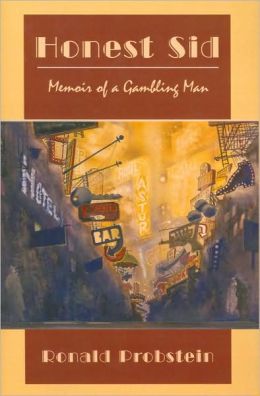
Ronald Probstein – The Jew Mob

The Jew Mob From Honest Sid

by Ronald Probstein

In the 1920s to 1940s most violent organized crime gangs were centered in New York, a large number of which were run and populated by Jews.  Among them were the cohorts and killers Meyer Lansky, Bugsy Siegel, and Champ Siegel.  One of the operations of Myer and Bugsy was running a group of contract killers under the sobriquet Murder, Inc.  I have written principally about Champ because my father Honest Sid was a long-time friend of his having grown up with him in New York’s Jewish Harlem.

I saw something of Champ’s nature one day when as a young boy my father took me to his apartment to hand over money from a betting operation. On pages 91 and 92 I wrote of the visit:

“Near a window two very pretty, slender women stood silent and motionless, holding glasses in their hands.  Nearby, three smartly dressed men in pinstriped double-breasted suits were also holding glasses, but they stared at each other intently and gestured vigorously as they talked.

My father took out an envelope and handed it to Champ.  Moments after he slid the envelope into his pocket, two of the men stared to scuffle.  Almost before I realized what was happening, Champ pulled a gun out of his pocket.  He held it in the air and yelled.

“Cut de fuckin’ rough house! Can’tcha see, dere’s a kid here”

The men backed away from one another immediately, glaring.  I had pressed myself tightly against my father’s leg and stood speechless. My father put his arm round my shoulder and said, “Listen Champ, I gotta get the kid back.””

After Champ’s wife died he left New York and went to California.  On page 95:

“He tied in with Bugsy Siegel.  In the next several years among other things he was arrested for mutiny on the high seas when he held the skipper of a treasure-seeking ship at bay with a shotgun.  And he was indicted in a Hollywood gang killing, along with Bugsy.  As he had done in New York, he managed to evade any convictions.”

Buy Now @ Amazon

Genre – Biographies & Memoirs

Rating – PG13

More details about the author & the book

Connect with Prof. Ronald Probstein on Facebook & Twitter

Wednesday, August 28, 2013

10 Things You Didn’t Know About Bette Lee Crosby

10 Things You Didn’t Know About Bette Lee Crosby

1)      Bette Lee reads and personally answers every bit of fan mail and every note readers send her.

2)      Her neighborhood book club meeting is the one thing Bette Lee will absolutely never miss.

3)      A sucker for cuddly white dogs, Bette creates her own calendar using pictures of her Bichon Frise Sugar.

4)      She is a bona fide night owl, and you can catch Bette meandering through Facebook, Pinterest and her Twitter feed in the wee small hours of the morning.

5)      Bette teaches Sunday School to first grade kids.

6)      Being kind is the most important personality trait a person can have, Bette believes.

7)      She also thinks after two glasses of wine, everything is funnier.

8)      She claims there is considerable truth in Elizabeth Taylor’s words “The problem with people who have no vices is that you can generally be sure they’re going to have some pretty annoying virtues.”

9)      Bette’s desk is way too small and always cluttered with notebooks, papers and planners.

10)  Before becoming a novelist, Bette lived in shivery cold New Jersey and was co-owner of an advertising agency.

Buy Now @ Amazon

Genre – Literary Fiction

Rating – PG13

More details about the author & the book

Connect with Bette Lee Crosby on Facebook & Twitter & GoodReads

Monday, August 26, 2013

Bradley Convissar – My Advice For Beginning Writers

My Advice For Beginning Writers

by Bradley Convissar

This blog post is going to be geared towards authors like me, those who have a full time job and write on the side.  I know there are many people who have the luxury to write as a full-time job, but I am talking mainly to the people who are trying to juggle their love of writing with a day job.  Juggle their love of writing with a family and the responsibilities a spouse and children bring.  Like a wise man once said… if you can dodge a wrench, you can dodge a ball.  If you can find time to write despite the maximum amount of distractions out there, then you can succeed.  A lot of this information will be the same as you have read other places, but that’s okay.  If you can pick out a nugget or two, then it was worth it.

My first piece of advice, the most important piece of advice, is this: even if writing is nothing more than a hobby in your mind, a side project, you need to treat it like a job.  You can’t just say “I don’t feel like doing it today”.  It’s like the gym.  Or flossing. One day off spirals to a week off.  And then weeks.  You cannot write sporadically or haphazardly.  You need a schedule and you need to keep to it. Of course things come up: emergencies, busy days, vacation, etc where there is simply not time to write, but you need to do your best to drag yourself to your chair every night, sit down, and do it.  And once you start, a lot of times it’s hard to stop.

If you are married or live with a significant other, you must make that person understand how important writing is.  That you view it as a second job.  If he or she doesn’t understand, it can lead to friction.  So make sure you have that discussion before they think that you are ignoring them.

If possible, and this may seem silly, but find an old computer without an internet connection.  The internet is the devil.  I’m serious.  It is so hard to sit down, especially when suffering from some writers block or lack of inspiration, and get to writing when there is a whole World Wide Web out there to explore.  Facebook and Tumbler and Twitter and Youtube and game sites… they all offer so much more in the way of instant gratification, and the urge to play around is hard to ignore.  Half of the posts on my Facebook feed are from other authors: Get off of Facebook and get writing.  I know, it’s impractical to find or buy another device just to avoid the internet, but you need to find some discipline because procrastination is your enemy.  I could write a whole post on this, but I’ll leave that to someone else.  When you sit down, you must resist the call to play games or play around on the internet, because once you open Firefox or Chrome or IE, you can pretty much count your writing session, or most of it, goodbye.

Keep a drink at hand to keep you from eating.  And I don’t necessarily mean something alcoholic

If you plan on publishing yourself, plan on spending some money.  If you want to be treated like a pro, you need to put out a professional piece of art.  Get a cover done by an artist.  Pay an editor to read your manuscript, not only for grammar and spelling, but for content.  Beta readers and friends are great, but someone who is an actual editor is better.  You need to view this as a business.  You think to think long term.  Cover art and editing is an investment that will help you grab and keep readers.

Don’t want to give away your masterpiece for free, even for a few days?  Write some short stories and sell them for free through KND select.  The samples that Amazon offers are good, but a lot of readers want to see your ability to craft a whole story, not just the first twenty pages.  Remember, selling books is a lot less about the monetary    investment for readers.  $.99-$2.99 is reasonable.  Potential readers are much more concerned about wasting TIME.  They are much more likely to pick up your novel if you convince them of your ability to write short works.  Some of my most devoted fans discovered me by reading free short stories first.

Pricing.  Yes, on a $2.99 book, you make 70% for every sale while on a $.99 book you only make 35%.  But remember, 70% of nothing is nothing.  At the beginning, if you are unknown and need people to take a chance and write reviews, you need to sell at $.99.  At least for a while.

Keep on writing.  Even if your first book doesn’t sell thousands of copies, don’t let it depress you.  The more books you have to sell, the larger the library, the bigger the chance of developing new fans.  It is a rare author that hits it big with his or her first book.

Buy Now @ Amazon

Genre – Thriller / Horror

Rating – PG13 bordering on R

(Horror with some violence / Some sex, not overly graphic)

More details about the author & the book

Connect with Bradley Convissar on Facebook & Twitter

Blog http://bradleyconvissar.blogspot.com/

Sunday, August 25, 2013

David VanDyke – Used Ebooks?

Used Ebooks?

by David VanDyke

A number of articles have been published recently about the possibility of reselling “used” ebooks. Here are a couple:

http://www.teleread.com/amazon/is-amazon-about-to-break-the-law/

http://www.publishersweekly.com/pw/by-topic/digital/retailing/article/56004-sale-of-used-e-books-getting-closer.html

Some people, mostly consumers, seem to think it’s a great idea; others, mostly authors and publishers, think it’s terrible, but if there’s anything I’ve learned in modern digital life, if something becomes possible, it will be done. The only questions are how and when.

A minority of people already “resell” their used ebooks. It’s called piracy. Some make money off it, some don’t, and some just facilitate this crime. I say crime because it’s both unlawful and immoral, but I’m not going to get all huffy about it.

The fact that at least piracy is recognized as illegal and immoral and is somewhat suppressed means that many law-abiding readers would rather pay a small fee for the convenience and peace of mind to download a legal ebook, than go through the trouble of searching out a piracy site, and by the way, risk acquiring some malware with their “freebie.” In this sense those sites that actually propagate that malware are the author’s friends by creating risks for doing so.

But as we learned with the iTunes model, if the legal download price is reduced to a reasonable level – for songs, it turned out to be 99 cents – most people move away from pirate sites. Add to that the fact that your lawfully-purchased library is fully recoverable through the vendor (Amazon, B&N or whatever) should your reading device get lost, stolen or destroyed, and most people will buy legally.

The twist here is that if Amazon and/or everyone starts reselling ebooks, how do we tell the original from a perfect digital copy? Just like with piracy, if there is not some DRM-like system in place, one person could “resell” their book many times.

The whole foundation of the concept of reselling a used ebook is “First Use Doctrine.” I am not by any means a lawyer but as I understand it, this means that if you buy something, you own it and can do whatever you like with it. But the law seems to treat digital properties differently. They say that a digital property is not subject to first use doctrine, and currently, ebook owners do not actually own the books themselves, they merely own a license to use the ebook. Since it is the license they own, my common sense says they should be able to resell the license. Because the rights-owner, that is, author and/or publisher, gets part of the sale price for a new license, I believe they should also get part of the sale of the resold license.

Of course, who manages licenses? The licensing vendor – for example Amazon. For Amazon to make this work without cutting its own throat, they would also need to get a piece of every resale for transferring the license to the new owner. If they tried to do this without giving the author and publishers a cut, especially the big publishers that still have clout and legal departments, they would never make it work, in my humble opinion. They have to make it win-win, so all players can make a reasonable profit.

There are many ways this could play out, and I’m not going to try to make predictions. I’d just say to my fellow authors and readers – expect it to happen sometime. Until then, all a little guy like me can do is keep writing the best books I can, and hope the big boys don’t kill off their golden geese.

Buy Now @ Amazon

Genre – SciFi /Adventure

Rating – PG13

More details about the author & the book

Connect withDavid Van Dyke on FacebookTwitter

Blog https://davidvandyke.wordpress.com/